I’ve just seen

Some thoughts? SPOILERS ahead!

I’ve just seen
Some thoughts? SPOILERS ahead!
When you pay for something expensive(-er), you have a risk – that item may be good or bad; when you pay little, it’s a guarantee – it’s bad. This is true in lots of cases. What you generally get is the mind safety and peace that you have at least a chance of getting something better. You pay for the mind comfort of knowing you might actually get something good. There are countless cases in which more expensive doesn’t lead to better. The fact that these are the exception, not the rule, only strengthens the rule. (this was said by an Economics teacher I had in school; he told it in the context of salaries – „pay somone a high salary, and you may have a good or bad employee, it’s a risk; pay someone a small salary, and, since the good people will always find a better paid job, you’ll have a certainty of having a poor employee”) In electronics, to get only marginally better products, you pay very high margins. Samsung Galaxy S4 is not 4 times better than a 4 times cheaper phone. An iPad is not 2-3 times better than an average tablet, as it is 2-3 times more expensive. If you can’t settle with little/average quality, you’ll pay much more. (Original quote – „Este absolut incredibil cat de putina „value for money” poti cumpara in ziua de astazi, cam tot pe ce-am pus mana high-end m-a dezamagit teribil. In general platesti 500% peste pretul „pietei” ca sa ai sporuri de sub …

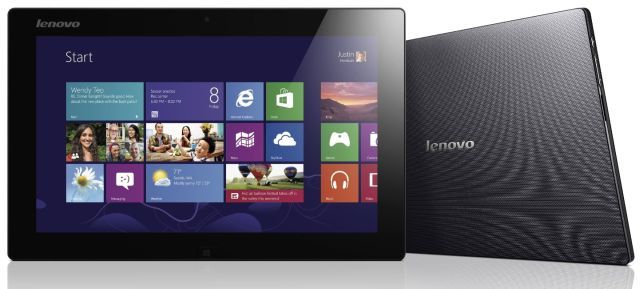
In July 2013 I bought Lenovo IdeaPad K3 Lynx 11.6-Inch 64 GB Tablet from the US. I had it in my hands since August. I paid $347.84 for the tablet and $22.99 for the cover. The joy of owning it was little, because it broke, and I had to repair it. Below, some feed-back on the process and on the tablet itself.
I’ve been going to Jim Bagnola‘s trainings/workshops for years. I’ve taken part to Intensive NLP by MindMaster (a 5 day training course) two times already, and I plan in taking it again. At times, things repeat themselves. You hear the same things. There’s only so much a person can tell you. Why do I do this? Deeper knowledge. I get to know things better. Re-participating, like re-reading, like re-watching a movie helps reinforce things. I get to know things better. For example, some say in order to be know better a specific subject, you need an advanced course on the subject. Perhaps. But how about retaking the class, in order to better understand and structure what you already know? I have a not-so-great memory, retaking a class helps me better understand things. I’m different. New insights. It’s the same message, I’m different than I was two years ago. I forgot some things, I got new ideas. Things connect differently. The trainings are different. The trainers don’t speak exactly the same way. Yes, the message is pretty much the same, but not identical. You get to see some new faces of the samge message. You become closer to being a researcher. There’s a difference between reading a motto and reading a page. Between reading a page and reading a book. Between reading a book and the whole opera of a person. And between this and researching a subject deeper. There’s one thing to watch a movie and to watch a TV series. There’s a feeling you get …
Two movies:
Why watch a poor movie?
There are two options: Trust yourself and act accordingly. Don’t trust yourself so much, and take the consequences. The thing is, as with many simple things, the decision is not so simple. I don’t think there’s a definite answer on this one. There might be situations in which having a poor self-trust will turn out well. In other situations, things differ. I see things go wrong due to too much self-trust. I think it’s more productive in some cases to have self-trust. In others, not. Examples of poor self-trust: You write an article. You value others’ opinions much. Whenever you say something on your own, you need to emphasize „This is my opinion. The personal one”. Someone wants to help you. You don’t think you deserve it. You say no. Someone wants to help you. You don’t think you have the right to say no. You say yes. Good self-trust: You take decisions on your own, without asking for everybody’s permission. You don’t speak of yourself, you speak of a group, even if not everyone is 100% pleased with this. You initiate things and see them through.
The best article on health I’ve read: Unhappy Meals | Michael Pollan). Alternative: Simple Rules for Healthy Eating – The New York Times (also see the links). The best documentary I know of on health – Sugar: The Bitter Truth – YouTube (in Romanian, more details – Schimbător de vieți? Despre zahăr, video în engleză, 90 minute (cu alternative de non-vizionare): Olivian Breda). The best diet I know of: Mediterranean Diet Review: Foods & Weight Loss Effectiveness / Mediterranean Diet – What You Need to Know – US News Best Diets. How to lose weight / live longer? Eat less. BBC News – The power of intermittent fasting / Eat, Fast and Live Longer – Horizon on Vimeo. Also: Neuroscientist Shows What Fasting Does To Your Brain & Why Big Pharma Won’t Study It | Collective-Evolution
What are the best goals to set in order to motivate yourself? It’s simple – put no goals to yourself. Instead, focus on creating a system in which you will like things. So, instead of saying „I’ll write 10 pages each day for a month”, say „I’ll find something which I like doing, like writing, and have lots of fun doing it”. Quotes on this: The researchers came to a stunning conclusion – one they didn’t expect and a result that turned conventional wisdom about both education and parenting on its head. The kids who were rewarded for their pretty pictures chose to spend less time drawing than those who weren’t rewarded. The children who weren’t told about the prospect of any prize continued to enjoy drawing, but the children who were given awards seemed reluctant to carry on without the promise of further honours. The initial award reduced the children’s motivation rather than spurring them on to greater heights. But that’s not all. The investigative team also asked a group of independent art aficionados, who were unaware of the goals of the study, to evaluate the quality of the children’s handiwork. The pictures drawn by the children who were rewarded tended to be rated as less competent, less skilled than those drawn by the unrewarded children. In other words, the rewarded children didn’t just spend less time drawing when given a choice in the matter; they seemed to put less effort into their art too. (source) A new study by a pair of researchers at the University of Chicago …
First, read some more on the Stanford marshmallow experiment – Wikipedia, the free encyclopedia: The Stanford marshmallow experiment refers to a series of studies on delayed gratification in the late 1960s and early 1970s led by psychologist Walter Mischel, then a professor at Stanford University. In these studies, a child was offered a choice between one small reward (sometimes a marshmallow, but often a cookie or a pretzel, etc.) provided immediately or two small rewards if he or she waited until the experimenter returned (after an absence of approximately 15 minutes). In follow-up studies, the researchers found that children who were able to wait longer for the preferred rewards tended to have better life outcomes, as measured by SAT scores, educational attainment, body mass index (BMI) and other life measures. However, recent work calls into question whether self-control, as opposed to strategic reasoning, determines children’s behavior. So, the solutions here would be to be able to think of something else (distraction) or think of the final prize (change the desire). The second solution, by Scott Adams: Expanding on that point, let’s say you have a choice between pasta and a white potato. Assume you enjoy both foods equally and you want to choose the best one for your waistline. Which do you pick? I recently posed that question to a crowd of ninety senior managers at a huge tech company. About 88 of them chose the potato. That’s the wrong answer because pasta is only half as high on the glycemic index. The two people …
First note: It might be a better idea to watch movies at the cinema. Not for the quality of the video or sound, but for your experience of going to the cinema, the people you’re with, the people around you. Second note: I’m not an expert in computer software for movies. I’ll share my experience. The best program to watch a movie – BS Player. If you want to watch part of the movie, do something else, continue viewing, BS Player has the single most useful thing to me – resume where I left off. It’s got a very good search for subtitles. You set the language (EN / RO / whatever), and the software can automatically look for subtitles for the movies which don’t start with one already. Even if the movie has a subtitle, it can still search for new ones. It’s very good at scrolling through the movie, either with clicking at the desired destination, or using keys. It has simple keys (if you know the keys of WinAmp, you’ll do fine – XCVB. F for full-screen, Space for play/pause). It has simple to understand menus. As a setting, in Romanian, I like to set the subtitle font for Central European, which has diacritics – ș, ț, ă, â, î. I watch the movies in sequences, not the whole movie at a time, so I like to set the default movie to another player (VLC, Media Player Classic). I like BS Player better, but the function for continuing the movie where I …