See this ad: It is supposed to make me go from „free service – 2 GB” to „paid service – 10 GB”. What’s the problem with it? It tries so much to do upselling, that I don’t trust the brand anymore. It’s obviously I generally wouldn’t pay for social sharing (I can share things very well on my own, thank you very much, and, also, generally the things which I send via a service like this aren’t meant for Facebook / other network sharing. I can create a password encrypted archive very easily, but I can see the utility of the service (for ease of use, for the people who might not have installed on their computer a software with ability to decompress files with passwords. Personalized pages. Come on, this is not meant paying for. No ads (it’s not included in the list above, but it’s a reason). Yes, going from 2 to 10 GB is a powerful reason. I understand why I would pay these money. But the extras? Not so much. Perhaps most people look at the list above and say to themselves – „look, you also get this and that”. Perhaps this happens. I don’t deny this. I’m just saying that to me, personally, this is really a frustrating ad to see and by giving me so many (useless) options, I have a smaller trust in the brand.
„We’ve all probably tried to learn a new language at some point. Foreign films can help you learn those words and accents, but a recent study suggests that subtitles can help a lot. Your first instinct is probably to turn on subtitles in your native language (English subtitles on a Spanish movie for example). But ideally, you’d watch with the subtitles in the foreign language as well. In the study, students learned the accents better and were able to understand new material easier. Plus, it helps you pick up individual words when people talk quickly.” Source – Learn a Foreign Accent by Watching Films With Subtitles The study (Foreign subtitles help but native-language subtitle… [PLoS One. 2009] – PubMed – NCBI) says: Understanding foreign speech is difficult, in part because of unusual mappings between sounds and words. It is known that listeners in their native language can use lexical knowledge (about how words ought to sound) to learn how to interpret unusual speech-sounds. We therefore investigated whether subtitles, which provide lexical information, support perceptual learning about foreign speech. Dutch participants, unfamiliar with Scottish and Australian regional accents of English, watched Scottish or Australian English videos with Dutch, English or no subtitles, and then repeated audio fragments of both accents. Repetition of novel fragments was worse after Dutch-subtitle exposure but better after English-subtitle exposure. Native-language subtitles appear to create lexical interference, but foreign-language subtitles assist speech learning by indicating which words (and hence sounds) are being spoken. Personally, I always watch movies in English with English …
Mental math is by no means required to survive in the world, but being able to do a few basic calculations in your head makes life a lot easier. For example, calculating a tip is all about basic percentages and is simple to do in your head: To find 5%, find 10% and divide it in two. To find 15%, find 10%, then add 5%. To find 20%, find 10% and double it. To find 25%, find 50% and then halve it. To find 60%, find 50% and add 10%. To find 75%, find 50% and add 25%. (source – The Skills We’ve Lost to Technology (and How to Get Them Back))
I see this happening more often than not. You take one character, and you give him more power than the adversaries. When James Bond is in prison, there’s always an escape route, even if in real-life, James Bond would probably not escape. It doesn’t matter how smart you are, it’s just difficult to escape. Sometimes, in more recent movies, the bad guys also have lots of power. They dominate, and they almost win. You need to believe this, that if you have some special skills (intelligence, brute force, agility), you can overcome any obstacle. Real life is really not like that. You can be a professional martial arts fighter and get beaten in a club. I like „Gattaca” a lot. One of the reasons for doing so is that it is really really difficult to beat your condition. I also like „The Grey„. In the movie, there are no superheroes. Plain humans. It’s hard to beat your condition. Same for „Le notti di Cabiria” – no super powers. Real, tough, life. I really don’t get into superhero movies. Sure, it would be lovely if life were like this. It generally isn’t. James Bond, in the last movie of the series, has little weapons arsenal, has little powers. He beats others with his intelligence, mostly. In the last Superman movie, the main character is very powerful & all that. But he’s not invincible, based on powers. He still needs brains. You can’t solve all the dilemmas by insisting. In the last Bourne, the bad guy is better than …
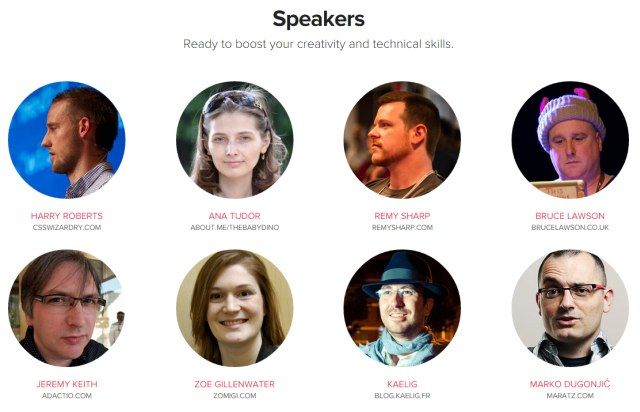
On September 23, 2014, took place SmartWeb Conference 2014, Bucharest (by Evensys) – „A conference for East-European web designers and developers, bringing you an exquisite lineup of speakers.”.
Speakers at the conference:
Below, some design/usability ideas I got from the conference. (with photos) :)
I just saw The Hustler (1961) for the second time. I actually saw the main scenes of the movie quite a few times during the past years, I liked reseeing the movie quite a bit. (note!) Spoilers ahead, don’t read the review unless you already saw the movie (note!) Some thoughts? The movie is intensely psychological. On the surface, it’s a movie on fights & winning. But the inner fights, the inner struggles are much deeper and are quite interesting to see. Some conflicts to see: Eddie Felson (Paul Newman), the main character, and his wish to win. Eddie Felson and his wish to beat his condition. Eddie Felson and his wish to never settle for something small. Eddie Felson and his fight with the systems (he is insubordinate, he always fights). Eddie Felson and his fight with being better. Eddie Felson and his fight with its vices (drinking). Eddie Felson and his fight of being the successful capitalist, rather than the unsuccessful socialist (there’s a fight with other people, who prefer people to be equal one to the other; he develops his skills, others want to drag him down). Minnesota Fats (Jackie Gleason), the already-proved champion, and his fight to always succeed. Minnesota Fats and his fight to be a kind person, nevertheless. Sarah Packard (Piper Laurie), Eddie’s girl, and her fight to have a fulfilled life. Sarah Packard and her fears of the unknown. Sarah Packard and her fears of not being loved. Bert Gordon (George C. Scott), the bad guy, and his fight to succeed. Bert Gordon and his fight to make life more exciting, his appetite for the …
What’s this about? Cultivating capacities for quality peer training:
1. Quality peer training for well-being
2. Quality peer training against discrimination
About EPTO: EPTO believes in the power of peer education as a tool to empower youth as actors in social transformation and to contribute to the creation of inclusive societies ensuring the well-being of all.
About the trainings: Participants were asked to share experiences and opinions, to practice active listening skills with others, and to learn emotionally as well as intellectually. Using non formal education methods: experience-based personal awareness, experiential learning, and small group discussions, the activities composing this training were interactive, participative, rooted in the principles of peer education and intercultural learning.
Logistics: When? Event days: from August 25th until 29th 2014. Where? Wexford, Ireland. Language? English.
If you want to know what I consider to the a complete checklist on the SEO criteria for analyzing a web site in 2014, you can read the following post.
I tried to cover all the major topics. Whenever necessary, I supplemented my criteria with external links.
I think the article covers pretty well most things a web site owner should take into account when analyzing SEO (internal structure, links, social media).
The article is highly personal – it depicts how I, Olivian Breda, see the subject of SEO.
It’s a long lecture ahead.
David Flores – 69/366: checklist, https://flic.kr/p/aSY7yx
Mostly, it’s work hard. To do so, you generally need to: Be healthy (eat right, do sports, rest well, avoid stress). Do self-improvement on various areas (reading, doing things better). Work when you don’t feel like working (have the power to say „Go! Go! Go!”, when you just don’t feel like this anymore). But, all-in-all, it’s about work. I’ve been to Năvodari these days, met some colleagues. Some thoughts: You can be the smartest in your generation (self-improvement), and, due to the fact you don’t like to work hard, and only read as pleasure, don’t succeed. You can be less-than-perfect in self-development, but over-compensate by working hard. There’s a big need in the workforce for working hard. You can be a good athlete, do some self-development, but if you don’t work hard, you’ll likely not succeed. Even if you lack a good discipline to do sports, even if you don’t read as much, if you work hard you’ll likely do at least some level of sports, and at least some level of healthy living, and at least some level of reading, at least on your niche business. All-in-all, succeeding is about hard work. (I might have said this before, I donno) I have some real-life examples in my head when I say this.
Sure, you can find some nice social networks, you can then Google for some user stats, and then aggregate the data. But wouldn’t it be simpler had a web site dedicated to just showing statistics existed? More than this, wouldn’t it be great had the statistics would be constantly updated with the latest news about the number of users for those specific networks? Good news! Such a web site exists, and it says: Here is my monthly, running tally of how many people are using some of the top social media, digital services and mobile apps updated for July 2014 (the best I could find, at least). This list grows pretty regularly. It began with a simple listing of some of the obvious social networks like Facebook, Twitter, LinkedIn, Skype, YouTube, WhatsApp, etc; then grew to include digital services like Amazon, Google, eBay, Netflix and Pandora; then the focus turned to APAC social and digital properties like Weibo, WeChat, JD.com, LINE and Renren; and lately, I have been focused on updating current listings, adding in new ones along with smaller niche ones that I may have overlooked at the beginning. This post now includes over 600 listings and more are added almost weekly. Visit the web site here (the social networks are so numerous, that they need to be divided on more than one page): How Many People Use Facebook, Pinterest, Twitter and 600 of the Top Social Media?